
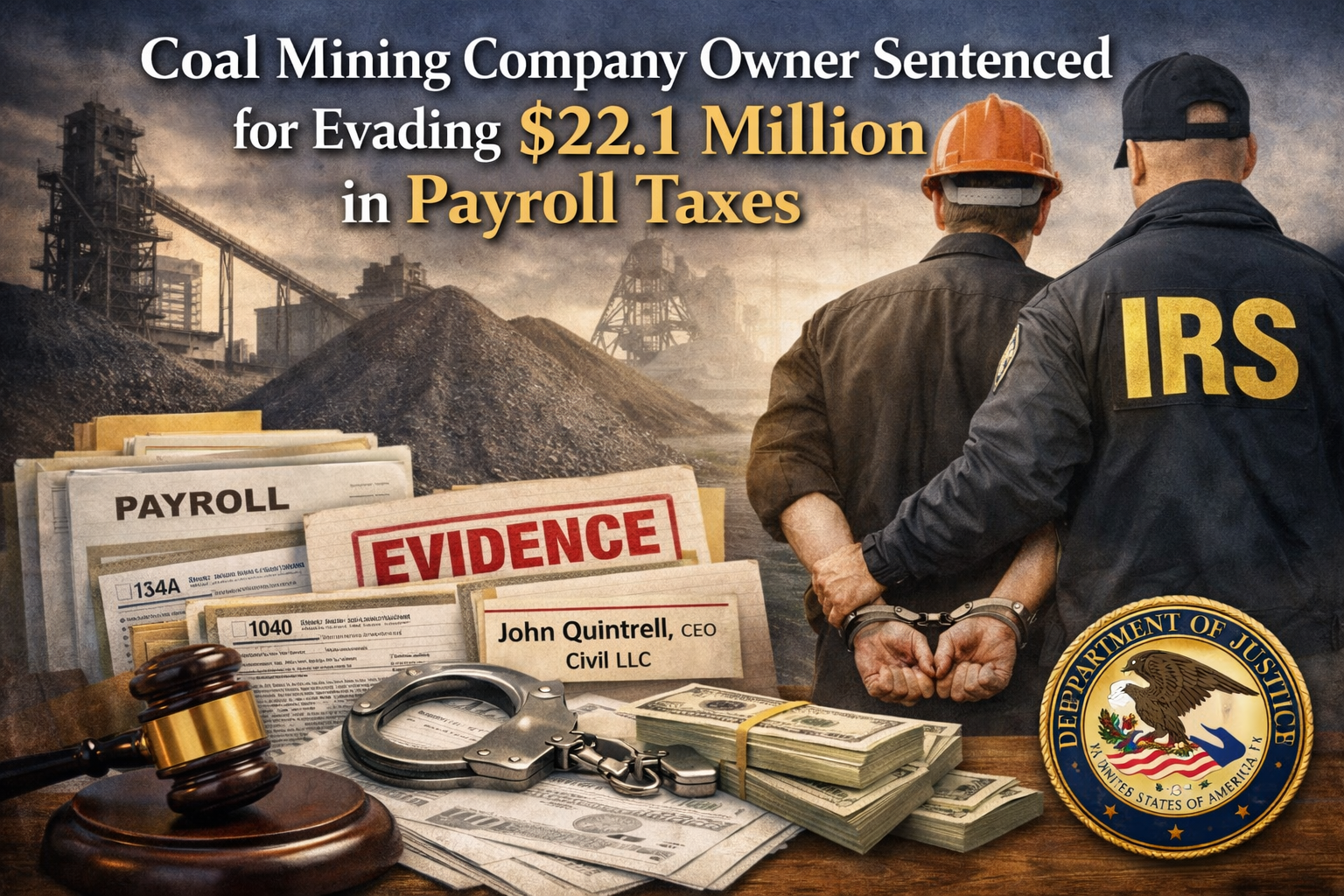
Coal Mining Company Owner Sentenced for Evading $22.1 Million in Payroll Taxes
A recent IRS case is a strong reminder that payroll tax debt is one of the most serious tax problems a business can face.
According to the government, a coal mining company owner was sentenced after failing to pay over more than $22 million in payroll taxes. Taxes were withheld from employee paychecks for years but were not paid to the IRS, and the employer share of payroll taxes also went unpaid.
The number in this case is extreme, but the bigger lesson applies to businesses of all sizes.
Why this case matters
Payroll taxes are not money a business can temporarily borrow and replace later. Once taxes are withheld from employees, that money is supposed to be paid over. When it is not, the issue can move beyond penalties and interest into something much more serious.
That is where payroll tax debt becomes a significant tax debt resolution issue. Many business owners do not fall into this situation all at once. It usually starts with cash flow pressure. They make net payroll, skip the tax deposit and tell themselves they will catch up next month. Then the balance grows, the quarters pass and the problem becomes much harder to contain.
The real lesson for business owners
What matters most in a case like this is not just the final dollar amount. It is the pattern behind it.
The IRS looks closely at businesses that continue operating while payroll tax debt keeps building. It pays attention when withheld taxes are repeatedly not paid over. That pattern is what makes payroll tax issues so risky.
A business does not need a multimillion dollar tax bill to have a serious problem. It only needs a payroll tax issue that keeps getting worse with no clear correction.
The key takeaway
For any business that is behind, the first step is to get honest about the scope of the issue. That means understanding what has been filed, what remains unpaid and whether current payroll obligations are being handled correctly right now.
From there, the focus should be on stopping the problem from growing and creating a clear tax debt resolution plan. Payroll tax debt should never be treated like something that will fix itself later. The earlier it is addressed, the more control a business owner usually has and the better the chances of resolving the issue well.
If you have a payroll tax debt reach out to schedule your free consultation.