
The IRS Is Refocusing on Payroll Tax Enforcement After Tax Season
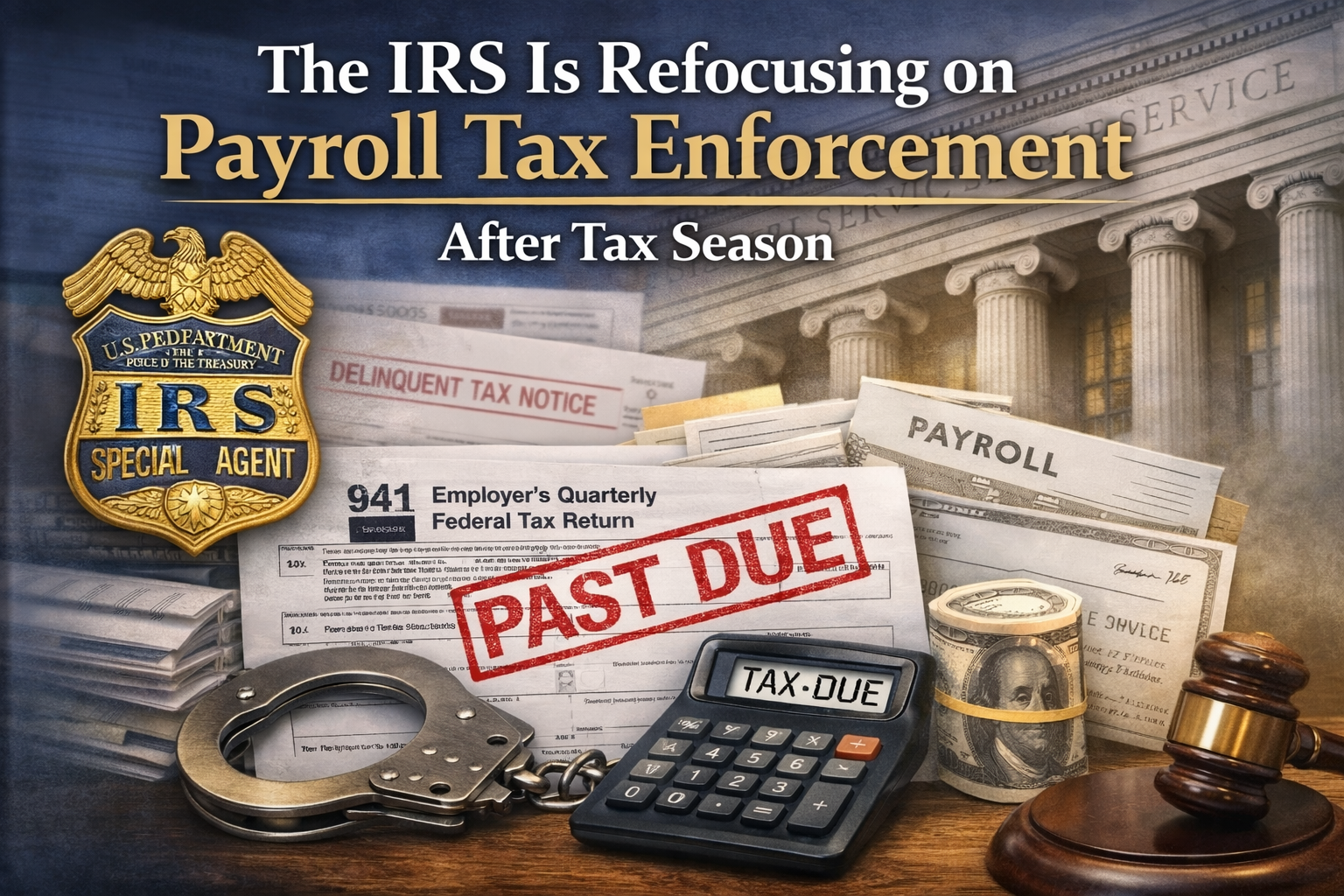
When tax season ends, many business owners finally have room to look at the issues they pushed aside during filing season. One of the biggest is payroll tax debt.
This is where things can get serious quickly. Payroll taxes are not treated like an ordinary balance due. When money is withheld from employee paychecks, the IRS expects that money to be paid over. When it is not, the issue can escalate much faster than many business owners realize.
Why payroll taxes draw so much attention
Payroll tax debt tends to carry a different level of risk because it often involves money that was already withheld from employees. From the IRS’s perspective, this is not just another unpaid bill. It is a pattern of noncompliance that can grow more severe the longer it continues.
That is why payroll tax problems often become a major tax debt resolution issue for business owners. What may start as a short term cash flow decision can turn into penalties, mounting balances and much greater exposure if the problem is left unresolved.
What business owners need to understand after tax season
After tax season, many businesses shift back into daily operations and assume they will deal with payroll tax issues later. That is usually the wrong move.
A recent criminal case brought renewed attention to this issue. A coal mining company owner was sentenced after years of failing to pay over payroll taxes and failing to pay the employer share as well. The amount involved was significant, but the real lesson is not just about the number. It is about the pattern. When payroll taxes go unpaid over time, the IRS notices.
For business owners, that means now is the time to get clear on what has been filed, what remains unpaid and whether current payroll tax obligations are being handled properly. It also means stopping the practice of using withheld tax money to cover other business expenses.
The key takeaway
If payroll tax issues have been sitting in the background during tax season, now is the time to address them. The goal is not panic. The goal is clarity, compliance and a real plan.
Strong tax debt resolution starts with facing the issue early. The sooner a business owner takes action, the more options they usually have to resolve the problem before it becomes much more serious.
If you have a payroll tax debt reach out to schedule your free consultation.